

Power, lighting and the low voltage that runs alongside it, from one licensed local contractor. One contract, one schedule, and one company answering for the whole of it.
Livewire is a licensed commercial electrical contractor in Richmond, Virginia, working across Central Virginia for general contractors, architects and specifiers, developers, and the people who run buildings. We take on power distribution, commercial lighting and lighting control, and the low voltage systems that sit beside them, networking, security, access control and audio visual. Because both trades are in house, a project that needs power and low voltage is one contract and one schedule rather than two. Site visits are free and most work is bid from drawings.
On most commercial jobs the power and the low voltage are two different companies, on two different contracts, coordinating through a general contractor who has fourteen other things to chase. It works, right up until it does not, and the place it fails is always the same: the seam between them.
This is the part of the job most contractors cannot quote, because they only hold one half of it.
Most commercial electrical work arrives through one of these three doors. They are different conversations, so it helps to say which one you are in.
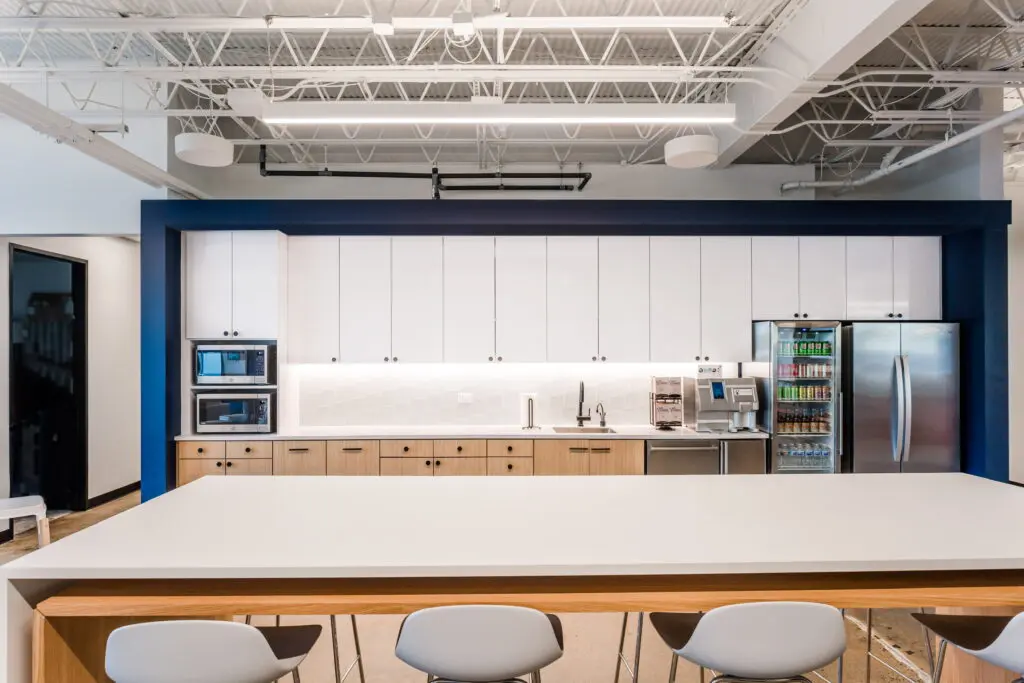
Ground-up buildings and tenant upfits, bid to the general contractor from drawings. We hold the schedule that comes out of preconstruction and coordinate with the trades around us rather than through them.
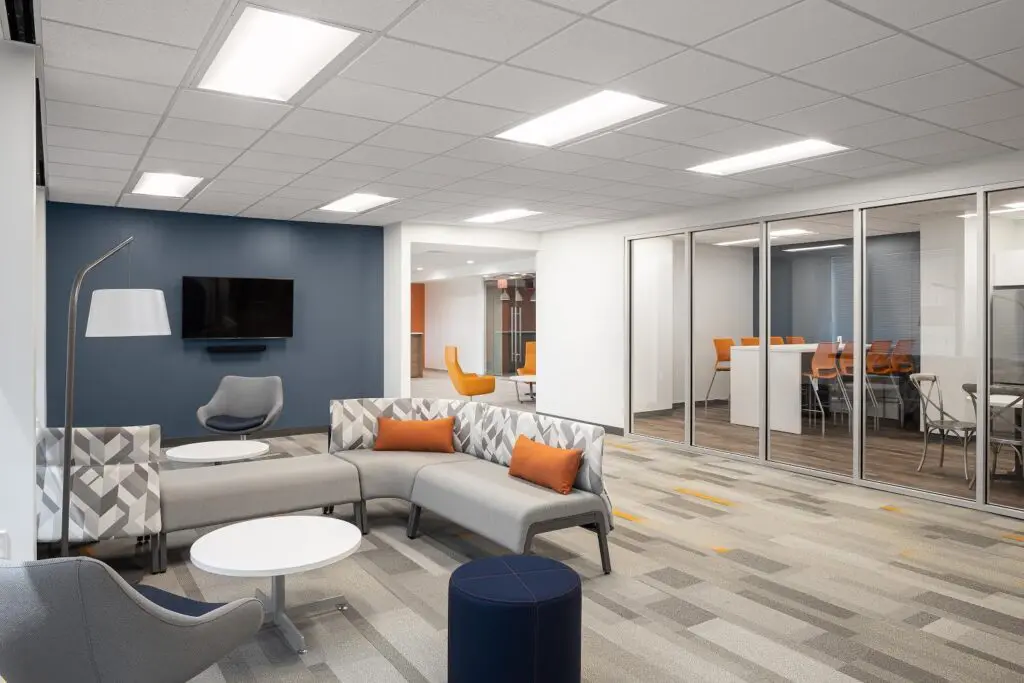
Architects, interior designers and engineers who want the power, the lighting and the systems drawn as one package. The earlier we are in, the more we can take out of the budget rather than add to it.
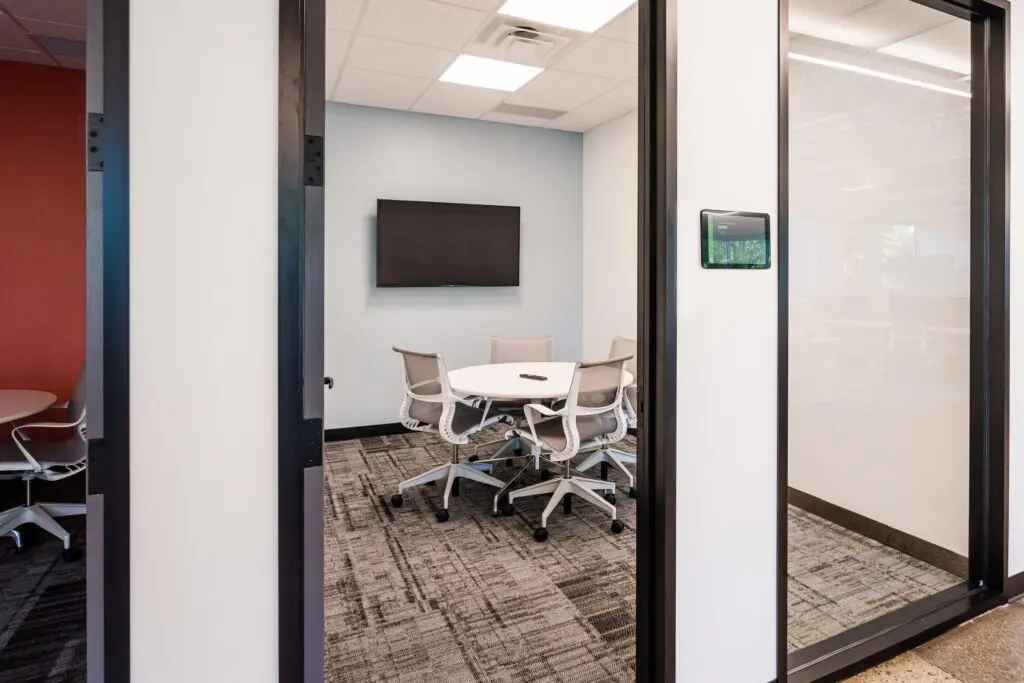
Buildings that already exist and already run. Adding circuits and capacity, relighting a space, taking on the work nobody else wants to do outside of business hours.
Named plainly, because these are the things people actually ask for.
If what you need is not on this list, ask. It is a short list on purpose, and it is the work we would rather be doing.
Commercial covers a lot of ground, so here is ours, in the buildings rather than in the abstract.
General contractors who keep coming back tell us the same thing, and it is not about price. It is that the bid is thought about. We read the drawings, we ask about the parts that do not add up, and we stay in the conversation while the job is still being priced. That is slower at the front and a great deal cheaper by the end, because the questions get asked before they become change orders.
Commercial work also has its own financing route. See commercial financing and technology as a service.
Richmond • Henrico • Short Pump • New Kent • Spotsylvania • Chesterfield • Ashland • Tuckahoe • Williamsburg • Thornburg • Midlothian • Glen Allen • Petersburg • Hopewell • Caroline • Powhatan • Atlee • Colonial Heights • Goochland • Fredericksburg • Mechanicsville • Hanover • Charles City • Charlottesville
Do not see your town? Contact us to find out if we can accommodate your needs.
Both. A great deal of commercial electrical work happens in a building that is still trading, still teaching or still treating patients, and that changes the job more than the scope does. It means agreeing which circuits can go down and when, working in evening or overnight windows where that is what the building needs, and leaving the space usable at the end of every shift. Tell us how the building runs when you ask for a bid and we will price the work around it rather than around our own convenience.
Most commercial electrical work is bid rather than charged by the hour. We price from the drawings and a walk of the space, and the number moves on four things: how much of the existing infrastructure can be reused, how far the new work is from the panel, whether the building has to stay open while we do it, and how tight the schedule is. Smaller service and repair work is charged by the hour at our published rate. If you want a number to plan around before the drawings are final, ask for a budget range and say so, and we will give you one with the assumptions written down.
Yes, and that is how a good share of this work reaches us. We bid to the GC, we hold to the schedule that comes out of the preconstruction meetings, and we coordinate with the other trades rather than around them. General contractors tell us the difference they notice is during the bid: we ask questions about the drawings before we price them, which is slower at the start and considerably cheaper by the end.
That is the whole reason this division exists. Livewire has been doing the low voltage side in Central Virginia for more than twenty years, lighting control, networking, security, access control and audio visual, and we have licensed electricians on staff for the power side. On a project where both are in scope, that is one contract, one schedule and one company answering for the outcome, instead of two trades pointing at each other over who was supposed to leave the conduit.
A site visit is usually within a few working days. How quickly the work itself starts depends on the size of it and on where your project sits in the schedule, and we will tell you honestly rather than agree to a date we cannot hold. If something is genuinely urgent, say so when you call and we will tell you that day whether we can help.
Greater Richmond and Central Virginia, from Fredericksburg down to Petersburg and out to Charlottesville and Williamsburg. The full list is further up this page. If your building is just outside it, ask anyway, because it often depends on the size of the project rather than on the map.
Drawings and a specification if you have them, and a walk of the space if the building already exists. If neither exists yet, a conversation is enough to start, and it is the cheapest time to have it, because electrical decisions get more expensive with every week that passes after the drawings are set. Tell us the building type, roughly when it has to be finished, and who else is on the job.
Send it over. We will read it, ask the questions that matter, and come back with a bid you can actually compare. The site visit is free and there is nothing to sign at the end of it.
Electrical is one half of what we do in a commercial building. This is the other half.
 CALL US 804.616.4156
 BOOK APPOINTMENT
 Get Instant Pricing