

The Real Benefits of Lighting Control
(Beyond the Tech Talk)
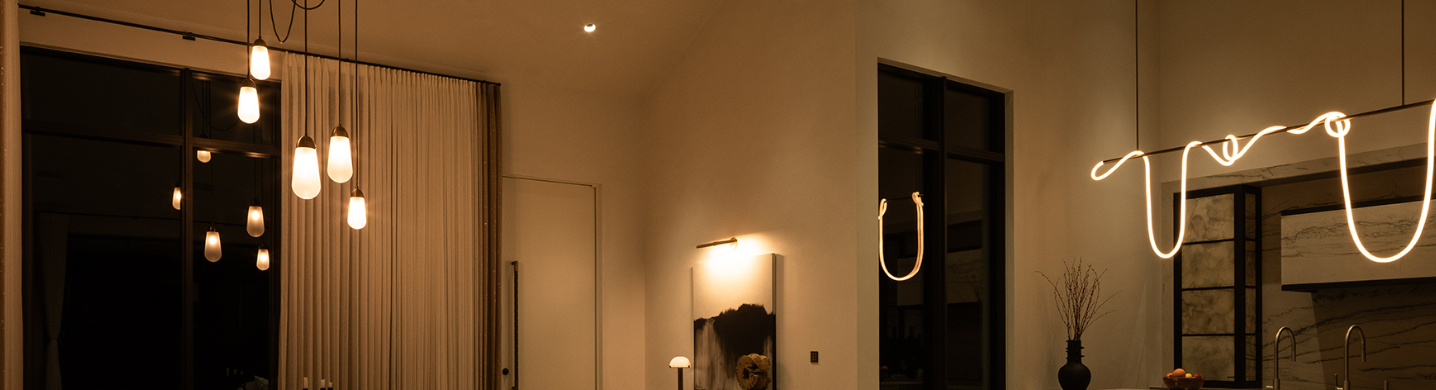
In real life, it looks like this:
You stop chasing your kids around the house turning lights off. Your home feels different in the morning than it does at 10 p.m. On purpose. And you’re not constantly fumbling with apps just to make it bright enough to cook dinner.
Most people don’t walk in asking for a “biophilic circadian lighting ecosystem.” They ask simpler things: Is this really that different from a regular dimmer? Am I actually going to feel a difference, or is this just tech for tech’s sake?
Once you get past the jargon, lighting control is less about gadgets and more about how your home feels and functions every day – how it supports your routines, saves energy, improves wellness, and keeps things simple for everyone, not just the tech enthusiasts.
Automation That Matches How You Actually Live
One of the clearest benefits is how well lighting control tracks the natural rhythm of your day.
As one homeowner puts it: “At six o’clock things happen, at seven o’clock things happen, at five o’clock things happen, at dark things happen. It adjusts to the timing of the day. It’s not like I’m adjusting a timer. It knows when dawn and dusk are and adjusts to that.”
That’s the heart of good lighting control:
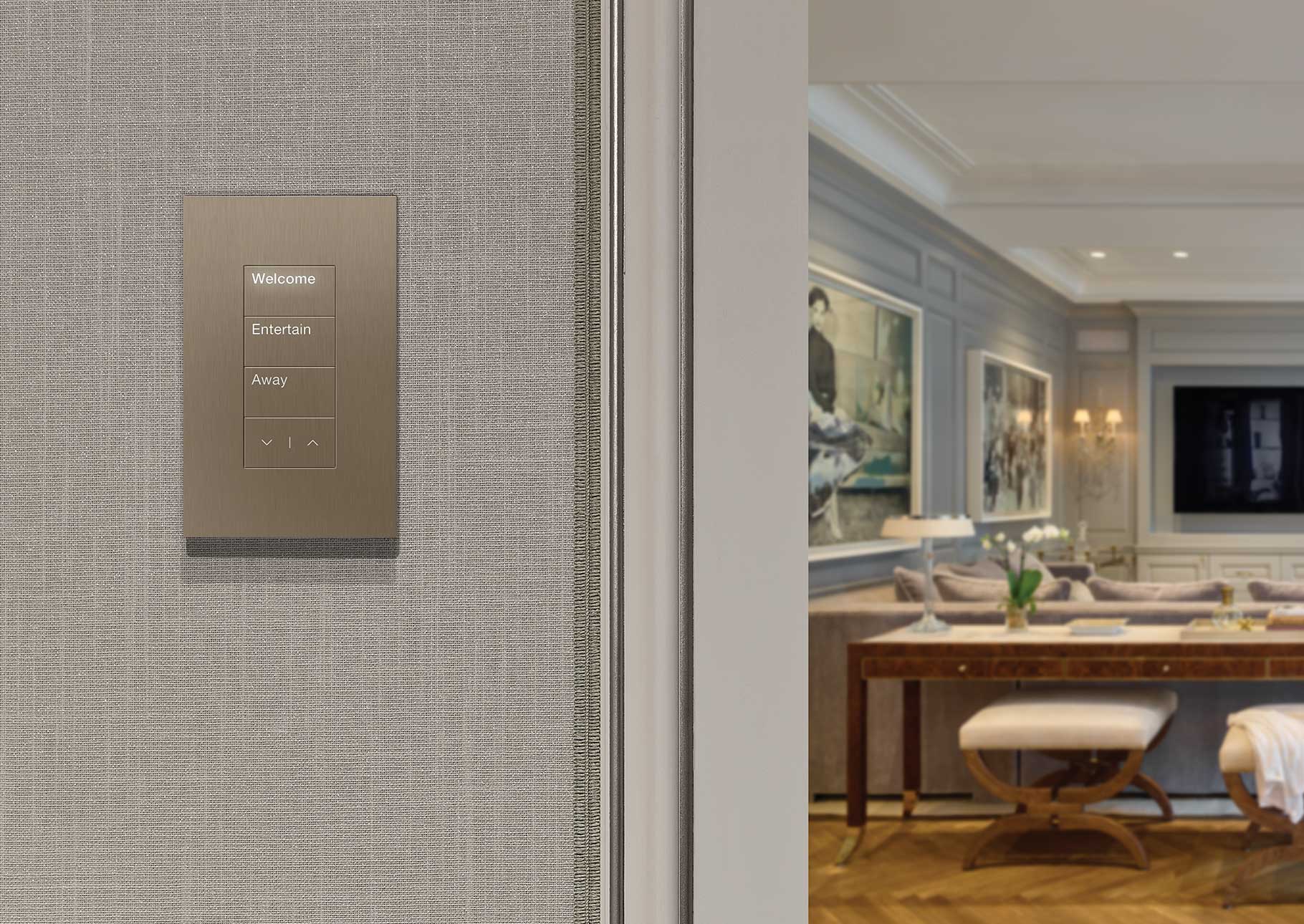
Time-based scenes adapt to your life—”Good morning,” “After work,” “Dinner,” “Wind down,” “All off.”
Astronomical scheduling means lights follow actual sunrise and sunset, not some janky old timer you forget to update twice a year.
Set it once, benefit every day. You don’t think about it; it just quietly does the right thing.
And when you do need to override something? It shouldn’t be a chore. Voice, keypads, motion, app —good lighting control gives you multiple paths to the same outcome.
Less Switch-Flipping, More Living
Lighting control is at its best when it fades into the background. Think of your day as an arc: waking up, morning routines, midday, coming home, dinner, winding down, bedtime, and hang lighting routines on each part of that arc.
Once those routines are dialed in, something simple but powerful happens: you stop thinking about switches.
One dad sums up the experience: “I haven’t touched a light switch in my home in a long time. I really love it because my kids cannot leave a light on. There’s no such thing. So as a dad, it’s amazing.”
Convenience. Rooms just “know” what to do at certain times.
Fewer arguments. No more yelling down the hallway about lights left on.
Energy savings baked in. If a scene turns lights off every night, you stop paying for “oops, I forgot.” Livewire
Built-In Energy Savings (Without Nagging Anyone)
Lighting control also delivers one of the most important benefits of all: helping you use less energy.
In some spaces, motion-based control is a better fit than full-blown scene programming. For example, kids’ rooms can use occupancy sensors so lights turn on when someone is moving around and shut off automatically when they leave. It’s not about fancy scenes or color temperature—it’s about ensuring you’re not paying for an empty room to be fully lit.
No paid-for empty rooms – If nobody’s there, the lights shut off.
Automatic nightlights – Low-level paths to bathrooms or hallways after dark.
Less mental load – You’re not the “light police” anymore.
Lutron-based systems and occupancy sensors can be programmed so you get comfort and safety without constantly thinking about switches or schedules.
Wellness, Biophilia & the “Forest Bath in Your House”
After convenience and energy savings comes something deeper: how lighting affects health and mood.
Lighting control paired with tunable, high-quality fixtures can start your day with cooler, more energizing light, shift to warmer, softer light in the evening to support rest and sleep, and make long stretches indoors feel less like a windowless office and more like a naturally lit environment.
This connects directly to biophilia: the idea that humans feel and function better when our surroundings mimic nature.
As one lighting control user explains: “The lights inside kind of mimic the solar day, which is really good for biophilia, like this fancy term for us craving the outdoors… imagine being able to have that in your home and to account for that based on the time of day. You can only do that with a lighting control system.”
We’ve talked about this a bit in our piece about Biophilia and Smart Home Technology, looking at systems like Lutron Ketra and circadian lighting that mimic sunrise-to-sunset patterns indoors.
What the Research Says
This isn’t just a vibe thing. Human-centric (circadian) lighting (tunable systems that change color temperature and intensity throughout the day) has been linked to better sleep quality and more stable circadian rhythms, improved mood and mental focus during the day, and reduced stress with a stronger sense of well-being.
There’s a parallel to concepts like Shinrin-yoku (forest bathing), where simply spending intentional time in natural light and nature has measurable impacts on stress and health. A lighting control system can’t replace an actual walk in the woods, but it can bring a surprising amount of that “I feel better in this light” experience into your everyday spaces.
Design & Atmosphere on Demand
Tap “Movie Night” and overheads lower, soft wall sconces glow warm, with just enough light on a nearby console to find the popcorn. Hit “Dinner” and suddenly the focus shifts to the table, with accent lighting on artwork or architectural features and everything else gently fading into the background. Choose “Party” and the whole space opens up, brighter in gathering areas, softer in corners, maybe a bit more drama on stone, wood, or art. Or maybe you’re a wildcard and the lights change to different colors of the rainbow.
Lighting control also lets you treat your home as one cohesive canvas instead of disconnected rooms. Interior and exterior lighting can be coordinated so the house feels intentional from the street through the foyer, kitchen, and outdoor living spaces. Pathways softly lit, landscape features highlighted, key architectural elements picked out. The property feels inviting and put-together instead of random.
Over time, these design details become part of the experience of living in the space. You’re not just flipping on a bank of cans… you’re choosing how you want the room to feel in that moment. And because those choices are baked into simple scenes and keypads, you get the benefits of a designer’s eye at the touch of a button, every single day.
Ready to See What Lighting Control Feels Like?
The good news? You don’t have to completely gut your home to get started.
If you’re building or remodeling:
- Plan lighting control while the walls are open
- Decide where keypads and scenes should live (kitchen, garage entry, primary suite, main living area)
- Talk to your integrator about tunable white or circadian-capable fixtures in key spaces
If you’re in an existing home:
- Start with a few “high-impact” areas like kitchen, great room, exterior, primary bedroom
- Layer in smart dimmers, keypads, and sensors that can expand over time
- Integrate with your existing smart home or security platform instead of creating yet another app island
The real benefits of lighting control don’t live in a spec sheet. They show up in how your home feels day to day: lights automatically follow your routine, you stop arguing about who left what on, your environment quietly supports your sleep, focus, and mood, and every room looks and functions like it was intentionally designed for the way you actually live.
If you’re in Central Virginia and want to experience that “forest bath in your house” feeling for yourself, we design and install Lutron-based lighting control systems that combine wellness, efficiency, and everyday simplicity.
You bring your routines and we’ll help the lights keep up.
 CALL US 804.616.4156
 BOOK APPOINTMENT
 Get Instant Pricing